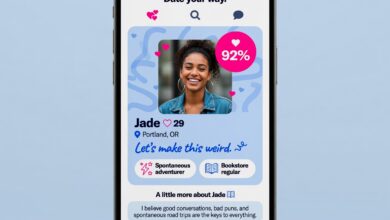
In the hyper-accelerated world of 2026 digital dating, attention is the most valuable currency. With the rise of high-speed 6G connections and AI-integrated matching algorithms, users are making decisions faster than ever. Research shows that the average user spends less than three seconds looking at a profile before deciding to swipe left or right.
This “split-second decision” isn’t just about superficiality; it’s a complex psychological process known as thin-slicing. Our brains are hardwired to scan for social cues, health markers, and personality traits in the blink of an eye. If you want to succeed in the modern dating market, you need to understand the visual and psychological triggers that turn a casual viewer into a match.
The Psychology of the Split-Second Decision: Understanding “Thin-Slicing”
The concept of thin-slicing, popularized by social psychologists, refers to our ability to find patterns in events based only on “thin slices” of experience. On a dating app, your profile is that thin slice.
Survival Instincts in Modern Romance
When someone sees your first photo, their subconscious mind is asking three primary questions:
-
Is this person a threat? (Safety check)
-
Is this person healthy? (Biological fitness check)
-
Is this person social? (Status and belonging check)
In three seconds, the brain processes your facial symmetry, the openness of your posture, and even the environment you’re in. If any of these “checks” fail, the finger moves left before the conscious mind even realizes why.
The Halo Effect
The “Halo Effect” is a cognitive bias where our overall impression of a person influences how we feel and think about their character. If your first photo is exceptionally high-quality and inviting, the user will automatically assume you are also kind, intelligent, and funny—even before they read a single word of your bio.
The First Photo: The Make-or-Break Visual Assets

In 2026, camera technology in smartphones has reached professional DSLR levels. This means the standard for “good photos” has shifted. A blurry mirror selfie isn’t just a bad photo; it’s a signal that you are out of touch with modern standards.
The Power of Eye Contact and the “Squinch”
Eye contact is the fastest way to build trust through a screen. However, there is a technique called the “Squinch”—a slight narrowing of the eyes that conveys confidence and mystery. Wide-eyed stares can often come across as fearful or uncertain, while a slight squint suggests a self-assured personality.
Lighting: Using the “Golden Hour” to Your Advantage
Lighting is the difference between looking like a vibrant individual and looking like a ghost in a basement.
-
Rembrandt Lighting: A classic portrait technique where light hits one side of the face, creating a small triangle of light on the opposite cheek. It adds depth and a sense of sophistication.
-
The Golden Hour: Photos taken during the hour after sunrise or before sunset provide a warm, soft glow that hides skin imperfections and makes eyes sparkle.
Resolution and AI-Scaling
With many users browsing on high-definition foldable screens or AR glasses, low-resolution photos are a dealbreaker. If your best photo is old, use AI-upscaling tools to sharpen the details. The algorithm prioritizes clear, high-contrast images because they are easier for the AI to “tag” and categorize for potential matches.
Color Theory in Dating App Photos: Hacking the Human Brain
The colors you wear in your primary photo act as a silent billboard. Different hues trigger different emotional responses in the person swiping.
| Color | Psychological Trigger | Best Use Case |
| Red | Passion, Energy, Dominance | When you want to stand out and appear bold. |
| Blue | Trust, Stability, Calm | Perfect for showing you are a “safe” and reliable partner. |
| Yellow | Happiness, Spontaneity | Great for “active” or “hobby” photos to show a fun side. |
| Black/Grey | Sophistication, Authority | Use for a professional or “night out” look. |
| Green | Growth, Health, Nature | Best for outdoorsy, adventurous profiles. |
The “Red Dress” (or Shirt) Effect
Studies consistently show that both men and women find individuals wearing red more attractive and sexually desirable. If you want to maximize your “swipe-right” percentage, wearing a touch of red in your first photo is one of the oldest and most effective hacks in the book.
Non-Verbal Cues: Body Language and Micro-Expressions
You are communicating even when you aren’t speaking. Your body language in a photo can tell a user if you are an extrovert, an introvert, an adventurer, or a homebody.
Open vs. Closed Posture
-
Open Posture: Arms uncrossed, chest forward, taking up space. This signals confidence and a welcoming nature.
-
Closed Posture: Crossed arms, hunched shoulders, or hiding behind an object. This signals defensiveness or insecurity.
The “Duchenne” Smile
A fake smile only uses the mouth. A Duchenne smile involves the muscles around the eyes (the “crow’s feet”). A genuine smile is one of the highest-rated traits on dating apps because it signals “low-threat” and “high-warmth.” If your smile looks forced, it triggers an uncanny valley response in the viewer, causing them to move left.
Hand Placement
Believe it or not, showing your hands is a trust-builder. In evolutionary psychology, hidden hands signaled a hidden weapon. Keeping your hands visible—holding a coffee, a book, or just resting on your lap—makes you appear more trustworthy and approachable.
Lifestyle Markers: Communicating Value Without Words
In the 3-second window, the user isn’t just looking at you; they are looking at your context. Your environment serves as a “shorthand” for your lifestyle and values.
The “Social Proof” Shot
Showing yourself in a social setting (without being overshadowed by a group) proves that you are a well-adjusted member of society. It suggests that other people like you, which makes you more attractive to a stranger.
Hobbies and High-Value Activities
-
The Traveler: A photo in a unique international location signals curiosity and financial stability.
-
The Athlete: A photo during a marathon or at the gym (done tastefully) signals health and discipline.
-
The Pet Owner: In 2026, “Dog Parents” and “Cat Lovers” still reign supreme. Photos with pets trigger a “nurturing” response and suggest you are capable of commitment.
The Bio’s Role in the 3-Second Rule: Scannability is King
While the photo gets them to pause, the bio is what confirms the swipe. However, in three seconds, nobody is reading a 500-word manifesto.
The “Hook” Technique
Your first line must be a hook. It should be a question, a “hot take,” or a funny observation.
-
Bad: “I like movies and hanging out with friends.”
-
Good: “Unpopular opinion: The book is always better than the movie. Change my mind.”
Bullet Points and White Space
In 2026, we consume information in “snackable” formats. Use emojis as bullet points to make your bio scannable.
-
15 countries and counting
-
Expert at making pasta but terrible at eating it neatly
-
90s Grunge enthusiast
The Call to Action (CTA)
End your bio with a prompt. “Tell me your favorite travel story” or “What’s the best coffee spot in the city?” This lowers the barrier for the other person to message you first after they swipe right.
Common Turn-Offs That Trigger an Instant Left Swipe
To win at the 3-second rule, you must avoid the “Instant Outs.” These are the mistakes that cause an immediate left swipe regardless of how attractive you are.
-
The “Ghost” Profile: No bio and only one photo. In 2026, this is a 99% indicator of a bot or a scammer.
-
Over-Filtering: If your skin looks like plastic and your eyes are glowing unnaturally, users will assume you are hiding something. Authenticity is the trend of 2026.
-
The Group Photo Mystery: If your first photo is a group of five people, the user won’t play “Where’s Waldo.” They will just swipe left.
-
Sunglasses in Every Photo: Eyes are the window to the soul. If we can’t see your eyes, we can’t build trust.
-
Negative Bios: “No drama,” “Don’t waste my time,” or “If you’re under 6ft don’t bother.” Negativity is a major “vibe killer” and suggests you are carrying baggage from past relationships.
AI and Algorithmic Sorting: How the App Helps You Get Swiped
In 2026, dating apps use Computer Vision to analyze your photos. The app’s AI knows if you are outdoors, at a party, or with a pet. It then shows your profile to people who have a history of swiping right on those specific tags.
Optimizing for the Algorithm
To “feed” the AI correctly, ensure your photos have clear subjects and high contrast. If the AI can easily identify your face and your “vibe,” it can more accurately place you in front of your ideal matches. This is why having a “thematic” profile (e.g., The Adventurer, The Intellectual, The Artist) performs better than a disorganized one.
Social Proof and Authenticity: The Verification Badge
With the rise of “AI-fishing” and sophisticated bots, the “Verified” badge is no longer optional. In 2026, users are increasingly hesitant to swipe right on unverified accounts. Taking the 30 seconds to do the biometric verification check on the app can increase your swipe-right rate by up to 40%. It tells the user: “I am a real person, and I am safe to meet.”
Mastering the Art of the Instant Match
Winning the 3-second rule isn’t about being a supermodel; it’s about being an effective communicator. By using high-quality lighting, understanding color psychology, maintaining open body language, and presenting a scannable, engaging bio, you are speaking directly to the user’s subconscious.
In the fast-paced world of 2026 dating, you only get one chance to make a first impression. Make sure yours is a “Swipe Right.”