You’re Probably Using OkCupid the Wrong Way
Learn how to use OkCupid's features more effectively to find better matches

If you are treating OkCupid like just another swipe app, you are missing out on its greatest strengths. Unlike platforms that rely almost entirely on superficial first impressions, OkCupid was built from the ground up to analyze personality, values, and compatibility. Yet, millions of active users log in every day and apply the exact same swiping strategies they use elsewhere, only to wonder why their matches lead to dead-end conversations or completely incompatible dates.
Dating app fatigue is real, but often, the problem isn’t the platform itself—it is the strategy. When you use a deeply analytical dating system incorrectly, you end up fighting against the platform’s algorithms instead of making them work for you. By shifting your approach and understanding how the system calculates compatibility, you can transform your experience from a frustrating numbers game into a streamlined path toward meaningful connections.
1. Why Your OkCupid Matching Strategy is Failing to Find Real Compatibility
To fix your experience on the platform, you first need to understand how the underlying system actually calculates compatibility. Most users treat the percentages displayed on profiles as a superficial novelty score. In reality, that percentage is the direct result of a complex mathematical formula based on the questions you answer, how you want your potential matches to answer them, and how much importance you assign to each topic.
Compatibility Calculation Elements:
1. Your answers to profile questions.
2. How you *want* an ideal partner to answer those same questions.
3. The weight of importance (Irrelevant, Somewhat, Very) you assign to each question.
When you answer questions carelessly or skip the step of assigning importance, you confuse the algorithm. If you mark a major dealbreaker—like political views or desire for children—as “Somewhat Important” instead of “Very Important,” the system treats it as a minor preference. As a result, you might see a 95% match rating with someone who fundamentally disagrees with your core lifestyle choices.
Another common pitfall is falling into the “Swipe Left/Right” robotic rhythm. OkCupid is designed for deliberate discovery. When you rush through profiles based solely on the first photo, you miss the rich contextual data the platform provides. The algorithm tracks your behavior; if you swipe rapidly without looking at prompt responses or question breakdowns, the system begins to treat your profile like a passive account, lowering your visibility in the discovery stacks of highly compatible users.
2. The Algorithmic Mistakes Destroying Your Match Score Accuracy
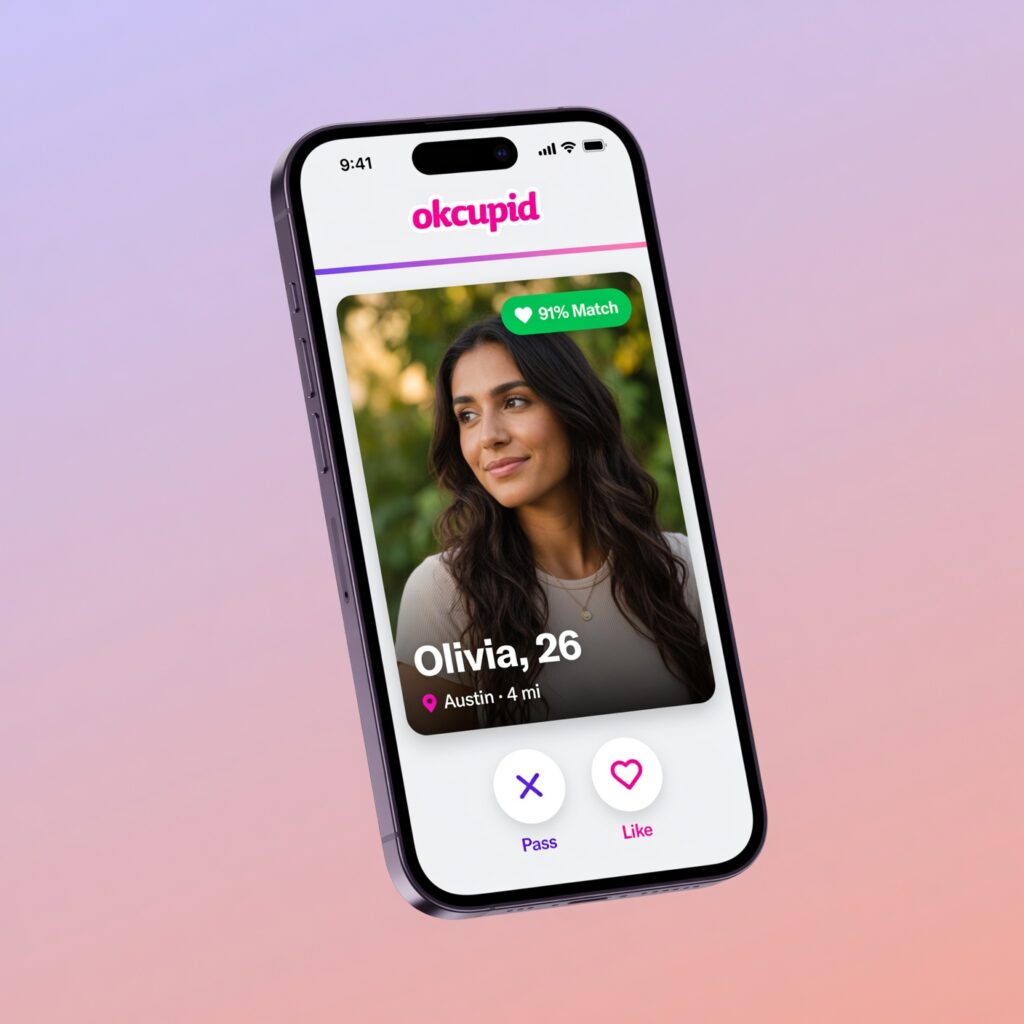
Every action you take on your profile trains the platform’s recommendation engine. If you want better matches, you have to feed the algorithm better data. Here are the most common mistakes users make that actively damage their score accuracy:
- Answering Too Many Irrelevant Questions: It is tempting to answer hundreds of trivia or pop-culture questions because they are fun. However, if your profile is flooded with opinions on pizza toppings and horror movies, these superficial answers can dilute the mathematical weight of your core values. Focus your energy on the first 50 to 100 questions that deal with relationships, lifestyle, communication, and ethics.
- The “Everyone is Fine” Trap: When choosing how you want your ideal partner to answer a question, selecting every possible checkbox to “keep your options open” is counterproductive. If you accept any answer, the platform cannot use that question to differentiate between an amazing match and a terrible one. Be honest about what you actually want.
- Neglecting the Importance Weights: The system offers multiple tiers of importance for every question. If you treat every topic with the same level of priority, your final compatibility percentage becomes an inaccurate average. Use the highest priority setting strictly for absolute dealbreakers, and keep the lower settings for minor preferences.
By streamlining your data input, you force the algorithm to judge compatibility based on the things that actually matter to a long-term relationship. Quality data in results in quality matches out.
3. Advanced Dating Profile Optimization Secrets for Maximum Visibility
An optimized profile acts like an organic search listing—it needs to be structured so that the right people can find it easily, while simultaneously encouraging them to engage. High-quality visual assets are the foundation of this strategy. Your primary photo must be a clear, well-lit portrait where you are making direct eye contact. Group photos, heavily filtered selfies, and pictures where you are wearing sunglasses obscure your features and cause users to move on quickly.
Your Visual Asset Checklist:
- Photo 1: Clear, front-facing headshot (no sunglasses or heavy filters).
- Photo 2: Full-length body shot demonstrating accurate scale and style.
- Photo 3: Action shot showing a hobby, sport, or creative pursuit.
- Photo 4: Social or travel shot in a natural, candid setting.
Beyond the photos, your profile copy needs to balance personality with readability. Dense blocks of text are intimidating to read on a mobile screen. Instead, break your text into brief, punchy paragraphs and leverage bulleted lists to highlight your favorite activities, books, or travel destinations.
Avoid generic platitudes like “I love to laugh” or “I’m equally comfortable dressing up or staying in.” These phrases say nothing unique about you. Replace them with specific, concrete details. Instead of saying you love travel, mention the specific street food market you visited in Tokyo or your favorite local hiking trail. These specific details serve as natural conversation starters for anyone reading your profile.
4. How to Structure Your About Me Prompts to Trigger Instant Replies
The prompts built into the interface are your highest-leverage tools for driving inbound engagement. A common mistake is using prompts to list demands or talk about what you don’t want. Negative profiles repel high-quality matches. Instead, use prompts to paint a vivid picture of what life looks like by your side, leaving natural openings where someone can easily insert themselves into a conversation.
Consider using the “Hook, Line, and Sinker” framework for your open text fields:
The Hook: Start with an engaging, slightly unusual fact about yourself or an uncommon opinion that sparks immediate curiosity.
The Line: Provide a brief snapshot of your day-to-day life, your creative passions, or a recent project you are proud of.
The Sinker: End the section with an explicit, low-pressure question or call to action that gives the reader a perfect excuse to send a message.
For example, if you choose the prompt “On a typical Friday night I am…”, don’t just write “Watching Netflix.” Instead, try: “Trying to replicate a recipe I saw on a cooking documentary, or hunting down the best street tacos in the city. Tell me your absolute favorite spot in town and I’ll tell you if it beats mine.” This structure removes the awkwardness of drafting a first message because it hands the reader a clear, fun topic to respond to.
5. Strategic Messaging Techniques That Convert Digital Matches Into Real Dates
Once you secure a match, the introduction phase begins. Sending a lazy “Hey” or “How’s your week going?” is a quick way to get ignored. On a high-intent platform, your first message needs to prove that you actually read their profile. Look through their answered questions or public prompts to find a shared interest, a quirky opinion, or a photo background you recognize.
The Anatomy of a High-Response First Message
An effective opening message combines a personal reference with an open-ended question. This shows genuine interest and makes replying effortless.
| Component | Purpose | Example |
|---|---|---|
| The Personal Reference | Establishes that you read their profile fully. | “I noticed you’re a huge fan of classic analog synthesizers…” |
| The Shared Connection | Creates immediate common ground. | “…I’ve been trying to learn sound design on a vintage keyboard myself.” |
| The Open-Ended Question | Drivers the conversation forward naturally. | “What’s the weirdest or most unique sound you’ve managed to create so far?” |
Keep the momentum moving forward once they reply. A common mistake is getting stuck in an endless loop of casual digital small talk that lasts for weeks. This text-only relationship pattern rarely transitions well into the real world.
Your goal should be to establish safety, build initial rapport, and then smoothly transition to a low-pressure in-person or video date within three to five days of consistent conversation. Frame the invitation naturally around a shared interest discovered during your chat, keeping the barrier to entry low.
6. How the Match Percentage Algorithm Works and How to Game It Safely
The internal mechanics of the platform’s core algorithm don’t have to be a mystery. The engine operates on a reciprocal value system. When you answer a question, you are telling the database three distinct pieces of information: your answer, how you want your ideal match to answer, and the importance of the question to you.
Importance Levels & Internal Point Value System:
- Irrelevant: 0 points (Hidden from matching calculations)
- Somewhat Important: 1 point (Minor influence on compatibility)
- Very Important: 250 points (Heavy mathematical weight)
Because of this exponential jump in point value, marking too many questions as “Very Important” can accidentally skew your match percentages. If you have 50 questions marked as top priority, a user who disagrees with you on a single minor point might see their match score drop dramatically, even if you are perfectly aligned on the big issues.
To manage this system safely, review your answered questions every few months. Clear out any outdated opinions or questions you answered years ago that no longer reflect your current lifestyle. Keep your “Very Important” designations restricted to non-negotiable core values—such as relationship structure, family planning, core religious or political stances, and major lifestyle habits like smoking or substance use.
7. Overcoming Dating App Fatigue Through High-Intent Filtering Practices
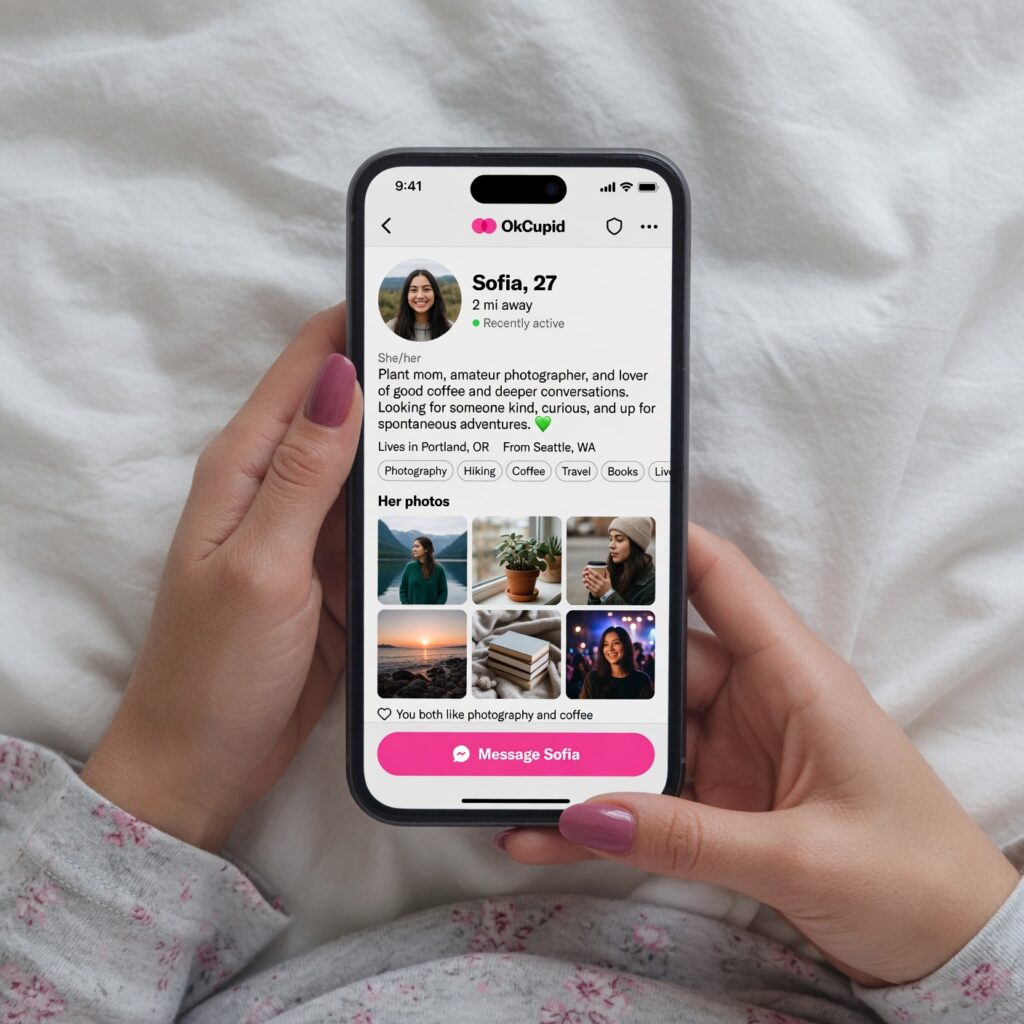
It is incredibly easy to feel overwhelmed by the constant stream of profiles on dating apps. This exhaustion usually happens when you treat online dating like a passive scrolling habit during your downtime. To protect your mental energy and get better results, shift your approach from passive scrolling to high-intent filtering.
Instead of keeping the app open all day and responding to notifications instantly, set aside one or two dedicated 20-minute windows daily to review matches and reply to conversations. Treat it with focused attention. Turn on advanced filters to narrow your discovery stack based on your absolute dealbreakers right from the start.
If you know you cannot date someone who smokes, or if you are specifically looking for a long-term monogamous commitment, filter out profiles that don’t match those criteria immediately. Filtering aggressively upfront isn’t being closed-minded; it is a respectful use of both your time and the time of the people on the other side of the screen.
8. Common Etiquette Pitfalls and Profile Red Flags to Eliminate Today
Even with a perfectly optimized profile and an excellent grasp of the algorithm, certain red flags can instantly halt your momentum. Many users unintentionally include subtle negative cues in their profiles without realizing how they come across to a reader.
- The Bitter Disclaimer: Writing things like “No drama players” or “Does anyone actually talk on here anymore?” might feel like venting, but it signals frustration and bitterness to a new match. High-quality users want to engage with positive, inviting profiles.
- The Ghost Town Profile: Leaving major bio sections blank or skipping the prompts entirely sends a message that you are not invested in the process. If you don’t take your profile seriously, others won’t take your matches seriously either.
- The Direct Link Out: Putting your social media handles right at the top of your bio with a phrase like “I’m never on here, add my insta” is a major red flag. It makes your account look like a spam profile or someone just hunting for social media followers rather than a genuine connection.
Keep your profile focused entirely on who you are and what you enjoy. Let your values and your personality shine through clearly, and keep the tone positive, engaging, and focused on the future.
9. Transitioning from Digital Chat to a Memorable, Low-Pressure First Date
The ultimate test of your digital strategy is how smoothly you can transition an online connection into a successful real-world meeting. The ideal first date should always be low-pressure, casual, and bounded by a clear time frame. A structured coffee meet-up, a casual drink at a quiet local spot, or an afternoon gallery walk are all excellent options. Avoid planning elaborate, multi-course dinners for a first face-to-face meeting; if you realize within the first five minutes that you lack chemistry, being stuck at a formal dinner table makes for an incredibly uncomfortable evening.
When you suggest the date, make the invitation specific and actionable. Instead of a vague “We should hang out sometime,” try proposing a concrete plan:
“I’ve really enjoyed talking to you about indie music this week. There’s a fantastic little coffee shop downtown that plays old vinyl records on Thursday afternoons. Are you free to check it out around 4 PM?”
This approach makes it incredibly simple for them to say yes, because you have already handled all the logistics. It also keeps the environment relaxed and easy to navigate, giving both of you the perfect setting to see if that high algorithmic match percentage translates into genuine, real-world chemistry.