Apps
How Dating Apps Verify Profile Photos
Learn how dating apps verify profile photos and detect fake or misleading accounts
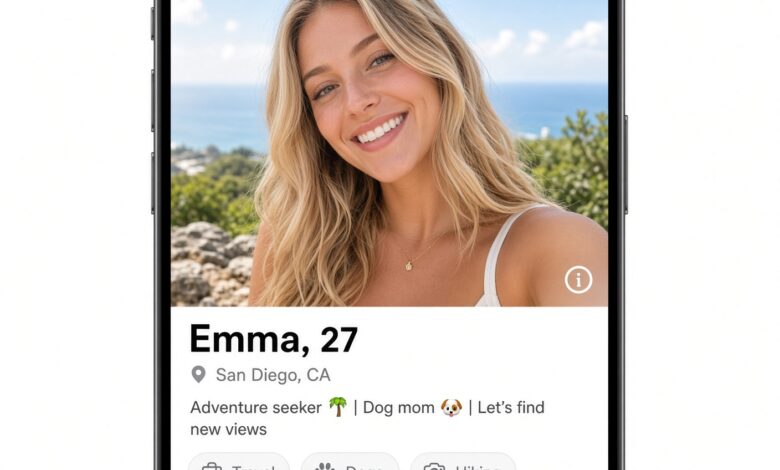
Online dating has completely transformed how people connect, form relationships, and find love. However, the rapid growth of digital romance platforms has also introduced unique challenges. Chief among them is online deception, commonly known as “catfishing,” alongside automated bot networks and financial scams. To combat these issues, modern dating applications have evolved far beyond simple email confirmations and phone number checks. Today, the frontline of digital security relies heavily on sophisticated profile photo verification systems.
If you have ever swiped through a dating app, you have likely noticed blue checkmarks or verification badges next to certain user profiles. Have you ever wondered what actually happens behind the screen when a user taps that verification button? This comprehensive guide explores the advanced technology, methodologies, and privacy safeguards that modern dating platforms use to verify profile photos, ensuring a safer and more authentic experience for everyone.
Why Profile Verification Matters in Modern Online Dating

Before diving into the technical mechanics of how verification works, it is essential to understand the scale of the problem it solves. The modern digital landscape is populated by malicious actors who create fake profiles to exploit unsuspecting users. These threats generally fall into a few distinct categories:
-
Catfishing: Individuals who misrepresent their identity, age, or appearance by using someone else’s pictures.
-
Scam Networks and Financial Fraud: Automated or manually operated accounts designed to build trust before tricking users into sending money, investing in fraudulent crypto schemes, or sharing sensitive personal information.
-
Spam Bots: Programmed scripts designed to flood platforms with promotional links, malicious URLs, or commercial content.
Without robust verification measures, user trust degrades rapidly. Platforms recognize that a secure environment directly correlates with user retention and satisfaction. By implementing friction-free yet highly accurate verification protocols, dating apps protect their user base from emotional and financial harm while preserving the organic joy of meeting new people.
The Evolution of Identity Confirmation: From Manual Review to Biometrics
In the early days of online dating, safety teams relied heavily on manual reviews, user reports, and rudimentary image matching. If someone was reported as a fake profile, human moderators would step in to review the account. While human oversight remains a critical safety net, it is entirely unsustainable at the massive scale of contemporary platforms, which handle hundreds of millions of active users globally.
The shift toward automation brought about reverse image search algorithms and basic metadata checks. However, bad actors quickly learned how to bypass these systems by altering image resolutions, cropping photos, or using pictures sourced from lesser-known social media accounts.
This cat-and-mouse game forced the industry to adopt advanced artificial intelligence, machine learning, and biometric facial recognition. Today’s verification systems do not just look at a picture; they analyze depth, geometry, and real-time human presence.
Step-by-Step Breakdown: How Dating Apps Verify Your Face
When a user initiates the photo verification process inside a major dating application, a streamlined yet computationally intensive sequence of events occurs in a matter of seconds. Here is a look at what happens under the hood:
1. The Liveness Check
The primary hurdle for any automated fraud system is proving that the person sitting behind the screen is alive, present, and acting in real-time. Bad actors often attempt to bypass security by holding up a printed photograph, playing a pre-recorded video of someone else on a secondary screen, or utilizing deepfake video loops.
To defeat these tactics, apps utilize liveness detection technology. During a video selfie prompt, the app typically instructs the user to position their face within an on-screen outline and perform minor, randomized movements—such as turning their head slightly to the left or right, or nodding. The software analyzes lighting shifts, micro-expressions, and spatial depth to confirm that the video feed is a live, three-dimensional human being rather than a static image or a synthetic reproduction.
2. Facial Geometry and Mapping (FaceMaps)
Once the system confirms liveness, it captures key frames from the video interaction. Advanced computer vision algorithms analyze the user’s facial structure—measuring the distance between the eyes, the shape of the nose, the jawline architecture, and other anatomical landmarks.
This process converts physical features into a mathematical representation often referred to as a FaceMap or FaceVector. Importantly, the app is not storing a traditional picture of your face for this comparison; rather, it translates your unique facial geometry into a secure numerical string.
3. Cross-Referencing Profile Pictures
With the secure facial template generated from the live video, the algorithm compares this data against the existing photos uploaded to the user’s profile.
-
Does the facial structure in the primary profile picture match the geometry of the live video?
-
Are there multiple distinct people featured across the profile’s photo gallery?
-
Do secondary images show signs of digital manipulation or tampering?
If the system calculates a high confidence score indicating that the live user matches the profile photos, the verification is approved.
4. Badge Issuance and Continuous Monitoring
Upon successful completion, the platform attaches a verification badge (such as a blue checkmark) to the user’s profile. This visual indicator signals to prospective matches that the account has been vetted through biometric screening.
However, verification is not a one-time event that lasts forever. Platforms continuously monitor account behavior. If a verified user subsequently deletes all their photos and uploads an entirely different set of images that deviate significantly from their original FaceMap, the system may flag the account and prompt a re-verification check.
The Role of Artificial Intelligence and Machine Learning in Fraud Detection

While facial recognition handles the individual verification of real users, artificial intelligence works tirelessly in the background to catch professional scammers and bot farms before they even reach the verification stage.
Modern machine learning models evaluate thousands of behavioral and visual signals simultaneously:
-
Visual Pattern Recognition: AI models can instantly spot stock images, professional model portfolios, or graphics scraped from public domains. If a profile photo has appeared across multiple known spam databases, it is instantly blocked.
-
Behavioral Velocity: Algorithms analyze how fast a user is swiping, sending messages, or matching. Automated scripts often operate at inhuman speeds, sending identical copy-pasted messages to hundreds of profiles within minutes—a dead giveaway for bot activity.
-
Device and Network Fingerprinting: Security infrastructure checks device metadata, IP routing patterns, and emulator footprints to identify coordinated fraud rings operating out of specific call centers or server farms.
Privacy, Data Security, and User Trust Concerns
As dating apps collect increasingly sophisticated biometric data, questions regarding user privacy naturally arise. Handling facial geometry requires strict regulatory compliance, particularly under frameworks like the European Union’s General Data Protection Regulation (GDPR) and various state-level biometric privacy laws in the United States (such as the Illinois Biometric Information Privacy Act).
Reputable dating applications adhere to rigorous data governance standards:
-
Immediate Deletion of Source Video: The original video selfie captured during a liveness check is typically processed instantly to confirm identity and then promptly deleted from active servers.
-
Encrypted Storage: Numerical facial vectors and minimal audit images are stored using enterprise-grade encryption (such as secure cloud infrastructure on Amazon Web Services). These records are isolated from public view and general company databases.
-
Clear Retention Policies: Leading platforms maintain transparent timelines for data retention, ensuring that biometric identifiers are permanently purged from their systems shortly after an account is closed or deleted.
Future Trends: What Lies Ahead for Dating App Security?
The technology governing digital identity verification is evolving at a breakneck pace. As generative artificial intelligence and hyper-realistic deepfakes become more accessible, dating app developers are forced to stay one step ahead of bad actors.
Looking forward, several emerging trends are set to shape the future of relationship platforms:
-
Decentralized and Self-Sovereign Identity: Industry experts are exploring blockchain and cryptographic zero-knowledge proofs, which allow users to prove they are verified humans without exposing underlying personal data or biometric templates to central servers.
-
Cross-Platform Trust Networks: Major tech conglomerates and safety coalitions are beginning to share anonymized threat intelligence, meaning a scammer banned and flagged on one platform can be proactively blocked across an entire ecosystem of apps.
-
Enhanced Multi-Factor Authentication: Moving beyond photos alone, future platforms may incorporate seamless, privacy-preserving integrations with government-issued digital IDs or trusted third-party credential providers for users who choose an absolute tier of verification.

The journey from awkward online bulletin boards to sophisticated, algorithmically curated matchmaking apps has been defined by a constant battle for trust. Profile photo verification has transformed from an optional novelty into an absolute pillar of modern digital safety.
By combining advanced liveness checks, machine learning anomaly detection, and robust biometric mapping, dating apps strike a vital balance between user experience and uncompromising security. For everyday users navigating the modern digital dating world, understanding these mechanisms provides peace of mind—transforming a landscape of uncertainty into a secure space designed for genuine human connection.