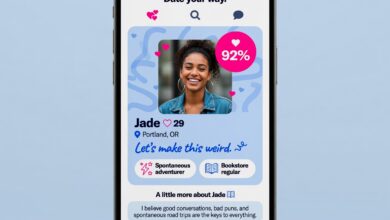
How Music-Based Matching Works on Modern Apps
See which dating and social apps use music-based matching to create connections

In the fast-paced world of digital dating, the “swipe left or right” culture has become increasingly exhausting. Millions of singles find themselves trapped in a cycle of superficial judgments, where a person’s entire personality is reduced to a handful of filtered photos and a pithy one-liner. But a new wave of innovation is shifting the focus from appearance to substance. Enter music-based matching—the sophisticated, data-driven approach that is redefining how we find our soulmates.
But how exactly does this technology work? Is it really possible for your Spotify wrapped to predict your romantic compatibility? In this guide, we dive deep into the mechanics, the psychology, and the future of music-integrated dating apps.
The Science of Sound: Why Music Matters in Attraction
Before we dive into the technical side, it is essential to understand why music is such a powerful indicator of human personality. Unlike a curated social media feed, our music taste is a deeply personal, subconscious reflection of our inner lives.
Psychological research from the University of Cambridge has shown that musical preference is highly correlated with the “Big Five” personality traits. For example, individuals who gravitate toward jazz and classical music often score higher on openness and intellectual curiosity. Conversely, those who enjoy upbeat pop or chart-topping hits often exhibit high levels of agreeableness and extraversion.
When you match with someone based on music, you aren’t just finding someone who likes the same bands; you are finding someone whose brain processes emotions, novelty, and social connection in a way that aligns with your own. This is what developers call “Neural Coupling.” When two people listen to the same music, their brains sync in ways that release dopamine, oxytocin, and endorphins—the same neurochemicals associated with the early stages of romantic love.
How Dating Apps Leverage Streaming APIs for Matchmaking

Modern apps don’t just ask you to list your favorite band in a bio; they use sophisticated API (Application Programming Interface) integrations to pull real-time data from platforms like Spotify or Apple Music. Here is the technical breakdown of how this happens behind the scenes:
1. Data Synchronization
When you connect your streaming account, the app gains access to your “listening DNA.” This includes your most-played tracks, artists you follow, your favorite genres, and even your listening habits (such as your “late-night chill” playlists versus your “morning commute” energy).
2. Algorithmic Processing
Once the data is ingested, the app’s algorithm assigns a “Compatibility Score.” This isn’t just about sharing a love for Taylor Swift. The system analyzes:
-
Acoustic Similarity: Do you prefer fast-paced, high-energy music or slow, melodic soundscapes?
-
Discovery Habits: Are you a “musical explorer” who constantly seeks new indie artists, or do you prefer the comfort of familiar hits?
-
Social Context: Does your listening history suggest you enjoy live concerts and festivals, or are you more of a homebody who enjoys curated background music?
3. Smart Matching
The algorithm then filters the user base to find individuals whose “Musical DNA” falls within a specific range of your own. This significantly narrows the pool from “anyone in a 50-mile radius” to “people who likely share your lifestyle and emotional frequency.”
Beyond the Bio: The Power of Musical Conversation Starters
One of the biggest hurdles in online dating is the dreaded “How’s your day going?” opener. Music-based apps solve this by providing natural, context-rich conversation starters.
When you can see that a potential match has a shared love for a niche experimental artist or a specific movie soundtrack, the ice is already broken. These apps often feature “Song Prompts” where users can pin their current favorite track to their profile. It acts as an auditory calling card.
Instead of asking a generic question, you can say, “I saw you’re listening to the new Radiohead remix—what do you think of the production compared to their older stuff?” This simple shift transforms a transactional swipe into a meaningful, intellectual, and emotional connection from the very first message.
The Role of AI in Musical Compatibility
Artificial Intelligence is taking music-based matching to the next level. Beyond simple data point matching, AI is now being used to analyze the intent behind your music choices.
Some emerging platforms use AI to create “Digital Cocktail Lounges” or virtual spaces where your music taste creates an environment for interaction. By analyzing the mood of the music you listen to during different times of day, these AI models can predict when you are most open to socializing and match you with someone who is experiencing a similar mood cycle.
Why Music-Based Matching is More Authentic than Traditional Apps
Traditional apps have long suffered from “Dating App Fatigue.” The burnout caused by endless swiping on photos leads to dehumanization. Music-based apps combat this through:
-
Reduced Superficiality: By prioritizing taste, the visual “halo effect”—where we assume attractive people are also kind or intelligent—is mitigated.
-
Honesty in Data: While it is easy to write a fake, boastful bio, it is almost impossible to fake a listening history that spans years of streaming. Your music taste is an unfiltered reflection of your true self.
-
Emotional Resonance: Music-based apps create a foundation of shared emotional experiences before a physical meeting ever takes place.
Tips for Optimizing Your Music-Integrated Profile

If you are using a modern dating app that incorporates music, how can you ensure your profile stands out?
-
Keep Your Streams Active: The more data the app has, the more accurate your matches will be. Don’t hide your “guilty pleasures”; they are often the most effective conversation starters.
-
Vary Your Playlists: Don’t just list one genre. A profile that shows a mix of energetic and relaxing music suggests a balanced personality.
-
The “Auditory Bio”: If the app allows it, choose a “theme song” for your profile that encapsulates your current life vibe. It’s the 21st-century equivalent of an opening line in a novel.
-
Use Music to Screen: If you know you cannot stand a certain type of music that is a major part of your lifestyle, look for apps that allow you to set “musical dealbreakers.”
The Future: Where Music and Love Intersect
As we move toward the future of technology, we can expect music-based matching to become even more immersive. We are already seeing the integration of shared real-time listening, where matches can “tune in” to the same song simultaneously, creating a virtual sense of presence.
The intersection of music and romance is not a new concept—songs have been the soundtrack to love stories for centuries. What is new, however, is our ability to use modern data to bridge the gap between two people who might otherwise never have crossed paths.
By leveraging the universal language of sound, modern dating apps are slowly shifting the paradigm from searching for a match to discovering a resonance. And in a world that often feels disconnected, that is a change worth singing about.