In the world of cybersecurity, we often focus on firewalls, complex encryption, and sophisticated antivirus software. We build digital fortresses to keep hackers out. However, there is one vulnerability that no software patch can fix and no firewall can fully block: the human element.
This is the realm of social engineering. It is the art of “hacking the human” rather than the machine. Instead of looking for a weakness in a website’s code, a social engineer looks for a weakness in a person’s psychology. By exploiting emotions like trust, fear, urgency, or greed, attackers trick individuals into handing over sensitive information, installing malware, or granting access to restricted systems.
In this comprehensive guide, we will explore the depths of social engineering, the tactics used by modern cybercriminals, and the essential steps you can take to protect yourself and your organization from these invisible threats.
Understanding Social Engineering: Hacking the Human Mind

Social engineering is a broad term that encompasses a wide range of malicious activities accomplished through human interaction. It uses psychological manipulation to trick users into making security mistakes or giving away sensitive information.
Unlike traditional hacking, which relies on technical vulnerabilities, social engineering relies on the fact that humans are naturally inclined to be helpful, trusting, and responsive to authority. An attacker doesn’t need to crack a 20-character password if they can simply convince an employee to tell them the password over the phone by pretending to be from the IT department.
The Core Principle: Manipulation Over Technical Skill
While many social engineering attacks involve technology (like emails or websites), the “engine” behind the attack is always psychological. The goal is to bypass technical security controls by targeting the person authorized to use them.
The Social Engineering Lifecycle: How an Attack is Structured
A successful social engineering attack rarely happens by accident. It is usually a calculated, multi-step process designed to lower the victim’s guard.
1. Information Gathering (Reconnaissance)
The attacker identifies the victim and gathers as much background information as possible. This might include organizational charts, personal interests, recent company news, or even the names of the victim’s colleagues. They use platforms like LinkedIn, Facebook, and company websites to build a profile.
2. Relationship Building (Establishing Rapport)
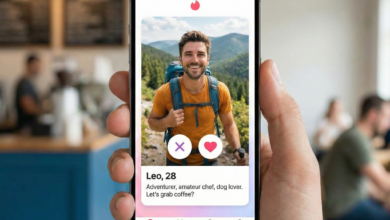
Once they have a target, the attacker initiates contact. They may pretend to be a new employee, a vendor, or a technician. The goal is to establish trust and create a sense of legitimacy.
3. Exploitation (The Hook)
After trust is established, the attacker “sets the hook.” They use a specific scenario (a pretext) to manipulate the victim. This could be an “emergency” that requires immediate action or an offer that seems too good to pass up.
4. Execution and Exit
The victim performs the desired action—clicking a link, sharing a password, or transferring funds. The attacker then collects the data or completes the crime and quietly exits, often leaving the victim unaware that anything has happened.
Common Types of Social Engineering Attacks to Watch For
To stay safe, you must recognize the different “flavors” of social engineering. While the goal is always the same, the methods vary significantly.
1. Phishing: The Most Common Threat
Phishing involves sending fraudulent communications (usually emails) that appear to come from a reputable source. The goal is to steal sensitive data like credit card numbers and login credentials or to install malware on the victim’s machine.
-
Spear Phishing: A highly targeted version of phishing where the email is customized for a specific individual, making it much more convincing.
-
Whaling: Phishing attacks specifically aimed at high-level executives (the “big fish”) like CEOs or CFOs.
2. Pretexting: Creating a Fake Persona
In pretexting, the attacker focuses on creating a good “pretext” or a fabricated scenario. They might call you pretending to be from your bank’s fraud department, needing to “verify” your identity by asking for your Social Security number or account PIN.
3. Baiting: Exploiting Curiosity
Baiting is exactly what it sounds like. An attacker leaves a “lure”—such as a malware-infected USB drive—in a public place (like a parking lot or a lobby). A curious person finds the drive, plugs it into their computer to see what’s on it, and inadvertently installs a virus.
4. Quid Pro Quo: Something for Something
A “quid pro quo” attack involves an exchange. An attacker might call random numbers at a large company pretending to be technical support. Eventually, they find someone with a genuine technical problem. The attacker “helps” them solve the problem while simultaneously asking for their login credentials to “complete the fix.”
5. Tailgating (Piggybacking)
This is a physical social engineering tactic. An attacker follows an authorized person into a restricted area (like an office building) by simply walking in behind them before the door closes. They often rely on the social norm of “holding the door” for others to bypass badge readers.
The Psychology of Deception: Why Do We Fall for It?

Social engineers aren’t just good liars; they are amateur psychologists. They use specific “triggers” that make it difficult for our brains to think rationally.
-
Authority: People are trained to obey those in positions of power. If an email looks like it’s from the “CEO” or the “IRS,” victims are less likely to question the request.
-
Urgency: By creating a sense of crisis (“Your account will be deleted in 2 hours!”), attackers force victims to act before they have time to think.
-
Fear: Scaring a victim into believing they have committed a crime or that their finances are in danger is a powerful way to ensure compliance.
-
Greed: Offers of “free money,” “unclaimed inheritance,” or “exclusive investments” bypass our skepticism.
-
Social Proof: Attackers may mention the names of your colleagues or common interests to make themselves seem like “one of the group.”
Real-World Examples of Social Engineering Scams
To understand the impact, look at how these attacks play out in real life:
The CEO Fraud (Business Email Compromise)
An accountant receives an urgent email from the “CEO” (who is actually an attacker using a spoofed email address). The email says, “I’m in a sensitive meeting and need a wire transfer sent to this new vendor immediately. Keep it quiet.” The accountant, wanting to be helpful and fearing the CEO’s authority, sends the money. Millions of dollars are lost this way every year.
The Tech Support Scam
You get a phone call from “Microsoft” or “Apple” claiming they have detected a virus on your computer. They offer to fix it remotely if you download a specific piece of software. Once you download it, they have full control over your computer and can steal your files or lock your system for ransom.
How to Detect Social Engineering: The Red Flags
The best defense against social engineering is a healthy sense of skepticism. Look for these warning signs:
-
Strange Senders: Does the email address look official, or is it a slightly misspelled version of a real company name (e.g.,
[email protected]instead ofmicrosoft.com)? -
Generic Greetings: Be wary of emails that start with “Dear Valued Customer” or “Dear Employee” instead of your actual name.
-
Pressure Tactics: Any request that demands “immediate action” or threatens negative consequences if you don’t comply is a major red flag.
-
Unusual Requests: Would your bank ever ask for your password over the phone? (The answer is always No).
-
Too Good to Be True: If you “won” a contest you never entered, it’s a scam.
Advanced Protection Strategies: Securing the Human Element

If you want to protect your digital life, you need to implement “Human Security” protocols.
1. Slow Down
Attackers rely on you rushing. Whenever you receive a request for information or money, take a breath. Verify the request through a different channel (e.g., call the person back on a known, official number).
2. Multi-Factor Authentication (MFA)
Even if a social engineer successfully steals your password, MFA can stop them in their tracks. By requiring a second form of identification (like an app-generated code), you create a barrier that is much harder to bypass.
3. Secure Your Social Media
Social engineers use your public profiles to gather info for their “pretext.” Limit what you share publicly. Don’t post about your work projects, your location in real-time, or personal details like your pet’s name (which is often a security question answer).
4. Continuous Education
Cybersecurity is not a one-time lesson. Stay informed about the latest trends in social engineering, such as AI-driven deepfakes, where attackers can now mimic the voice or face of a loved one or a boss in real-time.
The Role of AI in the Future of Social Engineering
In 2026, we are seeing a shift in how social engineering is executed. Artificial Intelligence (AI) has made it easier for attackers to scale their efforts.
-
Deepfake Audio: Attackers can now use just a few seconds of a person’s voice to create a “clone” that can hold a conversation over the phone.
-
Automated Phishing: AI can write perfectly grammatical, culturally relevant phishing emails in any language, removing the “broken English” red flag that many users used to rely on.
-
Data Aggregation: AI can scan the entire web to find connections between people, making spear-phishing attacks much more accurate and dangerous.
Awareness is Your Most Powerful Firewall

Social engineering is a reminder that in the digital world, the weakest link isn’t a computer—it’s a person. Technology can only do so much to protect us. The ultimate responsibility lies with our own awareness and willingness to question the digital world around us.
By understanding the psychology behind these attacks, recognizing the red flags, and maintaining strict digital hygiene, you can significantly reduce your risk of becoming a victim. In the fight against social engineering, knowledge isn’t just power—it’s security.