What you should never share on dating apps
Learn what not to share and post on dating apps
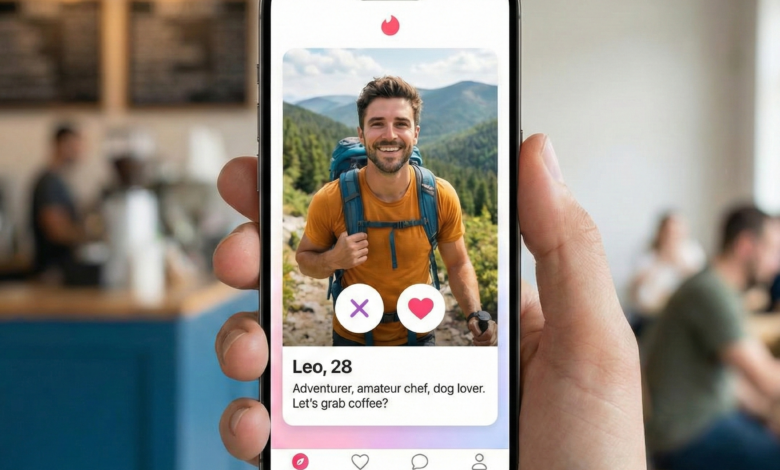
The world of online dating in 2026 is more vibrant and accessible than ever. With advanced matching algorithms and video-first profiles, finding a connection is just a swipe away. However, as the technology to connect us improves, so do the methods used by scammers, stalkers, and identity thieves.
When you create a profile on apps like Tinder, Bumble, Hinge, or more niche platforms, you are essentially creating a digital billboard for yourself. While the goal is to be open and authentic to attract a partner, there is a very fine line between being “transparent” and being “vulnerable.” Protecting your personal data is just as important as finding “the one.”
This guide provides a deep dive into the specific pieces of information you should strictly keep off your dating profiles to ensure your physical, financial, and digital safety.
The Golden Rule of Dating App Privacy: The “Need-to-Know” Basis

The fundamental principle of digital dating safety is the Information Sharing Hierarchy. In the beginning, a stranger only needs to know enough to be interested in a conversation. They do not need to know where you live, where you work, or how much you make.
Think of your profile as a teaser, not a biography. As trust is earned through consistent, respectful communication and—eventually—video calls or in-person meetings, you can gradually reveal more. However, certain “hard” data points should remain private until a high level of trust is established.
1. Personally Identifiable Information (PII): The “Starter Pack” for Stalkers
Personally Identifiable Information (PII) is any data that can be used to uniquely identify, contact, or locate you. On a dating app, sharing too much PII allows a stranger to “cross-reference” you across the internet.
Your Full Name
Using your full name is a major security risk. A simple Google search of a first and last name, combined with a city, can often lead a stranger directly to your LinkedIn profile, your home address via white pages, or even your voting record.
-
The Safe Bet: Use your first name only, or a nickname.
Your Exact Birth Date
While apps need your age to match you correctly, you should never display your full date of birth on your public profile. Your birth date is a key piece of information used by banks and government agencies to verify identity.
-
The Safe Bet: Display your age, but keep the specific day and month hidden in your settings.
Home or Office Address
It may seem obvious, but many people accidentally reveal their location. Mentioning a specific apartment complex name or a very niche neighborhood gives a stalker a small radius to search.
-
The Safe Bet: Use a general “Metro Area” or city name.
2. Professional Exposure: Why Your Workplace Is Off-Limits
In an effort to show they are “ambitious” or “successful,” many users list their exact job title and company. This is a goldmine for “social engineering” and physical stalking.
If a malicious actor knows you work as a “Senior Analyst at [Company Name],” they can:
-
Call your office: Pretend to be a delivery person or a relative to find out your schedule.
-
Wait in the parking lot: Know exactly where to find you at 5:00 PM.
-
Phish your work email: Find your professional email address and send malware disguised as a dating-related message.
Strategy: Keep your job description vague. Instead of “Architect at Smith & Associates,” use “Architect.” This tells your match what you do without telling them exactly where to find you during the day.
3. Financial Boundaries: Preventing the “Romance Scam”
Financial security is one of the most targeted areas in online dating. Romance scams have reached record highs in 2026, often involving complex “pig butchering” schemes where scammers build trust over weeks before asking for money or investment “tips.”
Never Share Your Salary or Net Worth
Even if you are proud of your success, listing a high income makes you a “high-value target” for professional scammers. It attracts people looking for a payout rather than a partner.
Avoid Discussion of “Sob Stories”
Scammers often look for emotional vulnerabilities. If you share that you are struggling with debt or a recent financial loss, a scammer might “offer to help” by leading you toward a fraudulent cryptocurrency platform or a “money-flipping” scheme.
The “Bank Test”
If a match asks you which bank you use, or if they ask “What was your first car?” (a common security question), treat it as a massive red flag. They are likely harvesting answers to your security recovery questions.
4. Protecting Your Social Circle: Why Kids and Family Don’t Belong on Your Profile

Sharing photos of your children or family members on a dating app is a significant privacy violation for those who cannot give consent.
-
Safety of Minors: Posting photos of your kids, especially in school uniforms or at recognizable local parks, puts them at risk of being targeted by predators who monitor these apps.
-
Family Privacy: Your siblings or parents didn’t sign up for the dating app; their faces shouldn’t be visible to thousands of strangers in your area.
-
Leverage: A malicious actor can use your children’s names or school locations to manipulate or threaten you later on.
Pro Tip: If you want to show that you are a parent, mention it in your bio text. If you must use a photo, use one where the children’s faces are obscured or they are turned away.
5. The Hidden Risk in Your Photos: Metadata and Background Cues
In 2026, smartphone cameras are so high-resolution that they capture details we often overlook. Before uploading a photo, perform a “background audit.”
Landmarks and Street Signs
A photo of you on your balcony might show a street sign or a uniquely shaped building in the background. A stranger can use Google Street View to find your exact apartment building in minutes.
Reflective Surfaces
Check the reflection in your sunglasses or a mirror. You might accidentally reveal your house number, the interior of your home, or other people who are with you.
Metadata (EXIF Data)
Most major dating apps (Tinder, Bumble) automatically strip metadata from photos. However, if you send a photo directly via a third-party app (like WhatsApp or Telegram) once you move off the platform, the GPS coordinates might still be embedded in the file.
6. Verification Codes and Tech-Security: The 2FA Trap
One of the most common scams on dating apps involves Account Takeover.
The Scenario: You match with someone, and they say, “Hey, I’m trying to verify my account, can I send a code to your phone? Can you just tell me the number?”
The Reality: They are not verifying their account; they are trying to reset the password to your Google, Facebook, or Instagram account. They have your phone number, and they are triggering a Two-Factor Authentication (2FA) code. If you give them that code, they can lock you out of your digital life instantly.
Rule: Never, under any circumstances, share a code that is sent to your phone with someone you met online.
7. The “Off-Platform” Transition: When Is It Safe to Move to WhatsApp or SMS?
Dating apps want to keep you on their platform for a reason: it’s safer. These apps have “Safety Centers,” automated reporting for harassment, and image-blurring technology for unsolicited “nudes.”
Scammers want to move you to WhatsApp, Telegram, or SMS as quickly as possible because:
-
They can bypass filters: They can send links to malware or phishing sites that the dating app would block.
-
They get your phone number: Once they have your number, they can find your other social media accounts or use it for “vishing” (voice phishing).
-
They can’t be reported: Once you leave the app, the dating platform has no record of the conversation, making it harder to get the scammer’s account banned.
Safe Practice: Stay on the dating app until you have had at least one video call. A video call is the best way to verify that the person looks and sounds like their profile. If they refuse to video call, they are likely a “catfish” or a scammer.
8. Detecting AI and Deepfakes in 2026 Dating
As we move through 2026, AI-generated profiles are becoming a major concern. Scammers can now use AI to create a perfect person who doesn’t exist, or even “deepfake” a live video call.
How to spot AI in dating:
-
Perfect Symmetry: AI faces are often “too perfect.” Look for strange blurring around the ears or hair.
-
The Background Test: AI often struggles with complex backgrounds. Look for “melting” objects or nonsensical structures behind the person.
-
The “Hand” Test: AI still struggles with drawing human hands. Look for extra fingers or strange positions.
-
Live Action Challenges: During a video call, ask them to do something specific, like “Hold up three fingers and touch your nose.” Deepfake software often glitches when an object crosses in front of the “face mask.”
Actionable Checklist: The 5-Minute Profile Audit
Before you swipe again, go through your profile and ensure you haven’t accidentally shared:
-
[ ] Your last name.
-
[ ] Your specific employer or office location.
-
[ ] Your children’s faces or school names.
-
[ ] Your home address or recognizable landmarks near your house.
-
[ ] Your exact birth date.
-
[ ] Your phone number or social media handles (keep these private until you’ve talked for a while).
-
[ ] Photos showing your car’s license plate.
Trusting Your Gut in a Digital World
Online dating is an incredible tool for finding love, but it requires a “Security First” mindset. By keeping your PII, your professional life, and your family private, you ensure that you are in control of the narrative.
The most powerful safety tool you have isn’t an app—it’s your intuition. If a match feels “off,” if they are rushing the relationship, or if they are asking for information that feels too personal too soon, trust that feeling. It is always better to unmatch and stay safe than to ignore a red flag in the hopes of a connection.