7 common skincare mistakes that harm your skin (and how to fix them)
Discover the main skincare mistakes that harm your skin

We live in the golden age of skincare. A decade ago, terms like “hyaluronic acid” or “skin barrier function” were reserved for dermatologists. Today, they are common knowledge among beauty enthusiasts scrolling through social media feeds in the United States.
Yet, despite having more information and better access to products than ever before, many of us are still struggling with our skin. We deal with sudden breakouts, persistent redness, dullness, or premature signs of aging, wondering why our expensive serums aren’t performing miracles.
The sad truth is that good intentions often lead to bad skin days. You might have the best products money can buy, but if you are using them incorrectly or engaging in counterproductive habits, you are likely doing more harm than good. Skincare is not just about what you buy; it’s about how you use it.
If you feel like your skincare routine has hit a wall, it’s time to troubleshoot. Below, we break down the seven most common skincare mistakes that silently damage your skin—and provide the immediate fixes to get your glow back on track.
Mistake #1: Skipping Daily Sunscreen (Even When It’s Cloudy or You’re Indoors)

This is, without a doubt, the number one skincare crime. Many people still view sunscreen as a “beach day only” product. Others believe that if their makeup foundation has SPF 15, they are covered.
Why It Damages Your Skin:
The sun emits ultraviolet (UV) rays every single day, regardless of the weather.
-
UVA rays penetrate clouds and window glass. They go deep into the skin, destroying collagen and elastin, which leads to wrinkles, sagging, and dark spots (hyperpigmentation). UVA is the primary driver of premature aging.
-
UVB rays cause surface sunburns.
By skipping sunscreen, you are essentially undoing all the good work your anti-aging serums and moisturizers are trying to achieve. Furthermore, relying solely on makeup for SPF is ineffective because you never apply enough foundation to reach the advertised protection level.
How to Fix It:
-
The Golden Rule: Apply a broad-spectrum sunscreen with an SPF of at least 30 every single morning as the final step of your skincare routine.
-
The Amount Matters: You need roughly a nickel-sized dollop (or two finger lengths) for your face alone.
-
Indoor Protection: If you sit near a window while working from home, you still need SPF. UVA rays travel through glass.
Mistake #2: Over-Exfoliating and Damaging Your Moisture Barrier
The feeling of freshly exfoliated, baby-soft skin is addictive. In the pursuit of that “glass skin” glow, many people go overboard with harsh scrubs or potent chemical acids (like high-percentage Glycolic or Salicylic acid).
Why It Damages Your Skin:
Your skin has a protective outer layer known as the moisture barrier (or acid mantle). This barrier keeps essential hydration in and harmful bacteria and irritants out.
When you exfoliate too often or too harshly, you strip away this protective layer. The result is a compromised barrier. Signs of over-exfoliation include:
-
Skin that looks shiny but feels tight and dry.
-
Increased sensitivity, redness, or stinging when applying products.
-
Sudden breakouts because the skin can no longer defend itself against bacteria.
How to Fix It:
-
Step Away from the Acid: If your skin is irritated, stop exfoliating completely for a week to let it heal. Focus only on gentle cleansing and moisturizing.
-
Less is More: Once healed, limit exfoliation to 1–3 times per week, depending on your skin’s tolerance.
-
Choose Wisely: Ditch harsh physical scrubs with jagged particles (like crushed walnut shells) which cause micro-tears in the skin. Opt for gentle chemical exfoliants like Lactic Acid (great for dry skin) or Mandelic Acid (good for sensitive skin).
Mistake #3: Going to Bed Without Removing Your Makeup Properly
We have all been there: it’s late, you’re exhausted, and the bathroom sink feels miles away. You fall asleep with a full face of foundation. Doing this occasionally is a mistake; doing it regularly is a disaster for your complexion.
Why It Damages Your Skin:
Your skin undergoes its most intensive repair and renewal processes while you sleep. When you leave makeup on, you are sealing in the day’s accumulation of dirt, oil, sweat, and environmental pollutants onto the surface of your pores.
This leads to the breakdown of collagen (accelerating aging), causes dullness, and creates the perfect breeding ground for bacteria, leading to blackheads and inflammatory acne. Furthermore, sleeping in eye makeup can cause eye irritation and even break your eyelashes.
How to Fix It:
-
Embrace the Double Cleanse: This is a game-changer, especially if you wear long-wear foundation or water-resistant sunscreen.
-
Step 1: Use an oil-based cleanser or a cleansing balm on dry skin. This dissolves oil-based impurities like makeup and SPF.
-
Step 2: Follow with a water-based foam or cream cleanser to remove sweat, dirt, and residue.
-
-
Keep an Emergency Stash: Keep micellar water and cotton pads on your nightstand for those incredibly rare nights when you genuinely cannot make it to the sink. It’s not perfect, but it’s better than nothing.
Mistake #4: Applying Your Skincare Products in the Wrong Order
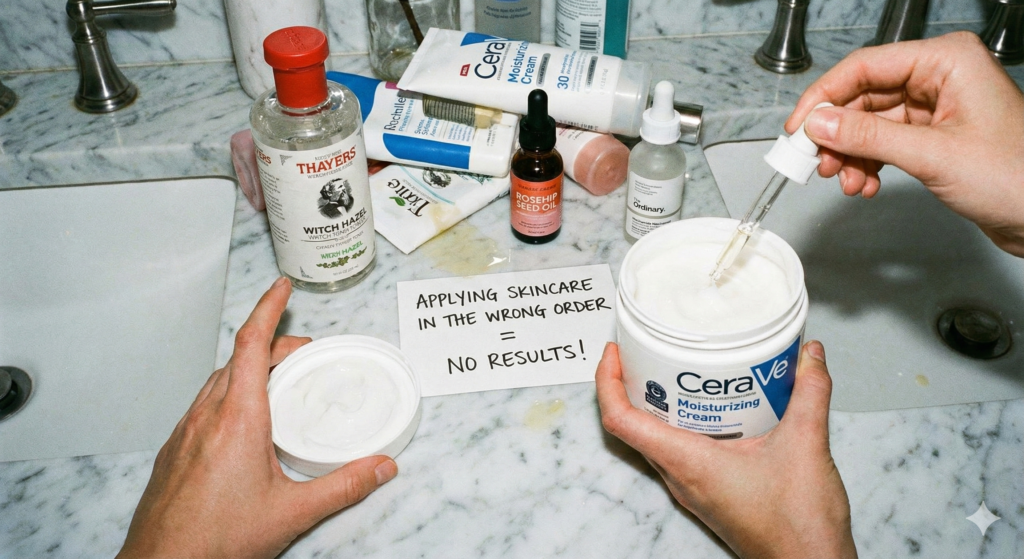
You could have the most expensive, scientifically proven serum on the market, but if you apply it at the wrong time in your routine, you might be rendering it completely useless.
Why It Damages Your Skin:
Skincare chemistry relies on absorption. Products are formulated with different molecular sizes. If you put a thick, heavy product on first, it creates an occlusive layer on the skin. Any lighter, thinner product applied on top of that layer will not be able to penetrate the skin to do its job.
For example, applying a facial oil before your hydrating serum means the serum just sits on top of the oil and eventually evaporates, providing zero benefit.
How to Fix It:
-
The Universal Rule: Always apply products from thinnest to thickest consistency.
-
The Correct Routine Outline:
-
Cleanser
-
Toner (optional)
-
Serums/Treatments (thinnest liquids first)
-
Eye Cream
-
Moisturizer (creams/lotions)
-
Face Oil (to seal everything in—nighttime only)
-
Sunscreen (always the final step in the morning)
-
Mistake #5: “Skin Picking” and Constantly Touching Your Face
This is often a subconscious habit born out of stress or boredom, but it is incredibly detrimental to skin health. When a pimple appears, the urge to squeeze it can feel overwhelming.
Why It Damages Your Skin:
Your hands carry millions of bacteria. Every time you touch your face, you transfer germs directly onto your skin, which can lead to new breakouts.
When you actively pick, squeeze, or pop a pimple, you are essentially causing trauma to the skin. You might push the infection deeper into the pore, making the blemish last longer. More importantly, picking is the primary cause of post-inflammatory hyperpigmentation (dark spots that last for months) and permanent pitted scarring.
How to Fix It:
-
Hands Off: Make a conscious effort to stop resting your chin in your hands or touching your face during the day.
-
Use Pimple Patches: These hydrocolloid stickers are miracles for pickers. They suck out the gunk from a whitehead and, crucially, create a physical barrier that stops you from touching the spot so it can heal in peace.
Mistake #6: Using Trending Products That Don’t Match Your Skin Type
Blame it on TikTok or Instagram. A product goes viral because it gave an influencer “glass skin,” and suddenly everyone buys it. But skincare is not “one size fits all.”
Why It Damages Your Skin:
Using products formulated for a different skin type can exacerbate your existing issues.
-
If you have dry skin and use a foaming cleanser designed for oily skin, it will strip your natural oils, leaving you tight, flaky, and uncomfortable.
-
If you have oily, acne-prone skin and use a heavy, rich cream designed for dry skin, it will likely clog your pores and cause massive breakouts.
-
If you have sensitive skin and jump on a trend involving high-strength retinol or fragrance-heavy serums, you risk severe irritation and barrier damage.
How to Fix It:
-
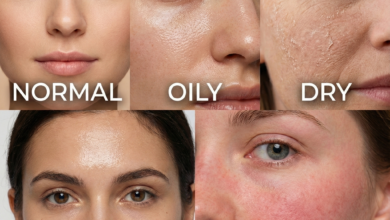
Identify Your Skin Type First: Is it Oily, Dry, Combination, Normal, or Sensitive? (A simple test: wash your face, wait 30 minutes without applying product. If it’s tight, you’re dry. If it’s shiny all over, you’re oily. If it’s shiny only in the T-zone, you’re combination).
-
Read Ingredients, Not Hype: Ignore the marketing on the front of the bottle and look at the ingredient list on the back. Learn which ingredients target your specific concerns.
Mistake #7: Neglecting Your Neck and Décolletage in Your Routine
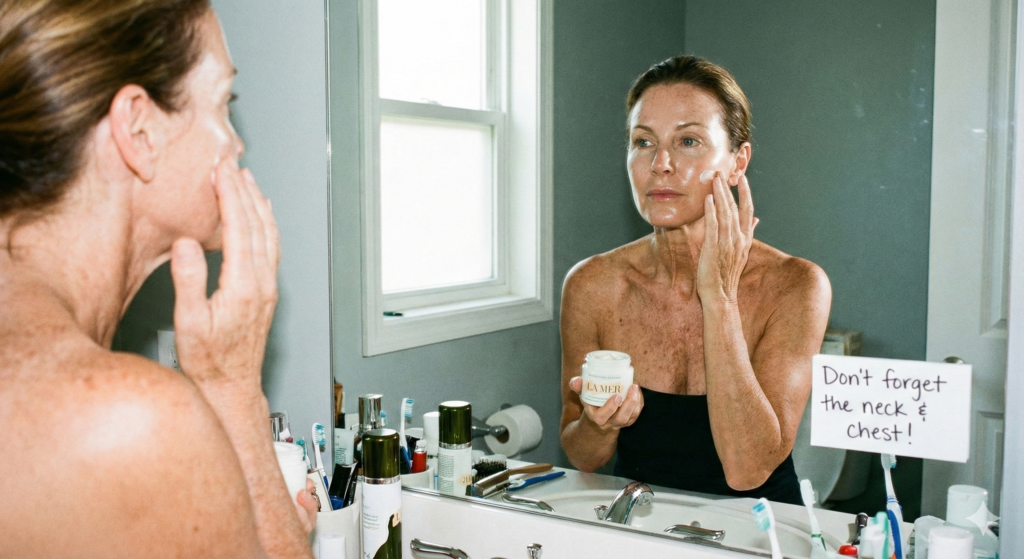
Many people treat their skincare routine as something that stops abruptly at the jawline. This is a major oversight for long-term skin health and appearance.
Why It Damages Your Skin:
The skin on your neck and chest (the décolletage) is thinner, more delicate, and has fewer oil glands than the skin on your face. This makes it much more susceptible to dryness and signs of aging.
Furthermore, these areas are almost always exposed to the sun. Neglecting them leads to the “floating head” phenomenon as you age—where your face looks youthful due to diligent skincare, but your neck is marked by deep wrinkles, sun spots, and crepey texture. The rise of “tech neck” (looking down at phones) has also accelerated wrinkling in this area.
How to Fix It:
-
Take It Down: Whatever you put on your face should go down to your chest. This includes your cleanser, your expensive anti-aging serums, your moisturizer, and, most importantly, your sunscreen.
-
Be Gentle: Because neck skin is delicate, avoid using very harsh exfoliants or high-strength retinoids in this area unless they are specifically formulated for the neck.
Consistency Over Intensity
Correcting these seven common mistakes is often more effective than buying a new $100 serum. Great skin isn’t about intensity—it’s not about scrubbing the hardest or using the strongest acids every night. Great skin comes from consistency and treating your skin with gentle respect.
By wearing SPF daily, respecting your moisture barrier, removing makeup thoroughly, and applying the right products in the right order, you create an environment where your skin can heal itself and thrive. Fix these habits, and you will likely see a noticeable improvement in your complexion’s health and radiance within just a few weeks.